

We all need help sometimes. Maybe it’s at work. Maybe its with child care. Or when moving to a new place. Or maybe it’s juggling something internally. In a culture that celebrates independence, we don’t always recognize when stress is taking over or how to help someone who is struggling.
May is Mental Health Awareness Month. That doesn’t mean mental health experiences or emergencies only happen in May. They happen all the time…because we are human. You may be thinking “it’s only March.” You are correct! May, March, October. It doesn’t matter what the month is, what matters is how you’re doing. One way to better understand mental health is by recognizing where we (or others) fall on the stress continuum.
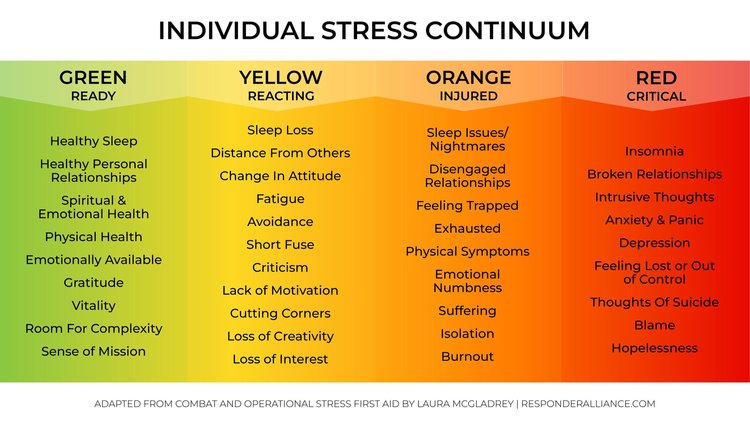
Last weekend I was taking a class and we were discussing the Stress Continuum for psychological first aid. This is adapted from Combat & Operational Stress First Aid by Laura Mcgladrey and is used by EMS, first responders, outdoor professionals and search & rescue teams.
It’s not just for those people. This is an amazing tool, one that anyone can use. As leaders, you can use it at any workplace to check in with teammates and co-workers. You can use this at home to check in with loved ones. “Hey checking in, what color is everyone today?” If you see yourself or someone else reacting more in the yellow or orange, you can help by checking in and listening.
Our western culture has taught us that we need to be fiercely independent and that we’re unique and special. Yes, you are unique and special…. AND human. Yes you can be independent and ask for help. Work is hard. Relationships are hard. Things get hard. And that is NORMAL. Hard is a common part of the human experience. Hard is normal and it’s ok to talk about it.
I know this experience because I’ve been there. I’ve ignored stress, pushed through exhaustion, and told myself I’d be fine. I didn’t talk about it. I was burnt out. Not functioning well. At times angry. And at the same time I felt shame for feeling like that. Like I was some “abnormal” human. That I wasn’t good in my core. So I took on more to try to prove to myself that I was good. Add more to stress. Brilliant idea!
Our brains are silly things. We often think fast and the result is the opposite of what we need. We tell ourselves wild untrue stories. We think we can correctly predict the future. And what’s proven, is we can’t. If you’re interested in reading more on this give Thinking Fast and Slow by Daniel Kahneman a go.
What we may need is dependent on each person. What I needed was a giant dose of self-compassion, to slow down, understand what my priorities were and then focus on only those. (A quick note of gratitude to those who are on my support team – thank you!) I’m often reminded, we have to live the lesson before we can learn the lesson. Depending on where other people are on the stress scale, they may need someone to listen to their experience. They may need outside professional help from a therapist. Or inpatient care at a facility. All are great. All are normal. All are ok.
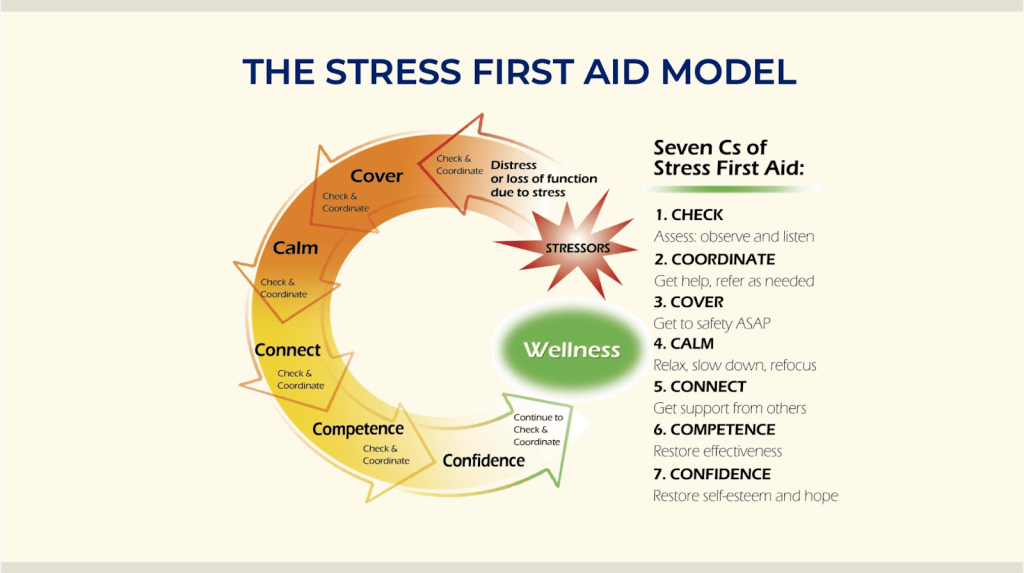
Mental health isn’t just a conversation for May. It’s every month, every day. So check in with yourself. Check in with others. Offer help when you can. And if you need help-ask for help. It’s normal, it’s what makes you human.
Strategies to strengthen mental health:
- Get quality sleep
- Talk to someone you trust
- Practice Mindfulness
- Seek Therapy
- Write
- Spend time in Nature
- Exercise – Ladies Trail Crew Group ride is April 23rd in Eagle. More info soon.
- Volunteer – the first Ladies Trail Crew work session is April 29th. Sign up here
- Eat Healthy food
- Practice Gratitude
Local resources here if you need.
 Hailee Rustad